Sunday, February 26, 2017

Water Quality

1) What are Coliform bacteria how do you prevent it, and what is the standard?


Coliform bacteria are a collection of relatively harmless  microorganisms that aid in the digestion of food and live in large numbers in plants, soils, and the intestines of warm-blooded (humans) and cold-blooded animals. 

Standard: 0 Total Coliform Bacteria

To Prevent Coliform Bacteria:
-homeowners who use cisterns, ponds, or springs as drinking water source should use treatment devices to disinfects and filter the water to remove coliform bacteria
-home water filters and other water treatment devices should be changed and maintained in accordance with manufacturer's recommendations
-chlorination, ultraviolet light, boiling, ozonation, and iodination are some disinfection methods to eliminate coliform bacteria from water supply  

2) What is Turbidity and what is the standard?

Turbidity is a measure of how cloudy water is. It can come from sources that are fairly benign such as suspended sediment in the water, or it can come from high levels of disease-causing organisms. Turbidity is generated as water moves through soil and into the ground water supply. 

The drinking water standard for turbidity is 1 NTU (nephelolometric turbidity unit). Public water supplies must not exceed 0.3 NTU in 95% of daily water samples that are taken every month. 


3) What is Radon and what is the standard?

Radon is an extremely toxic and colorless gaseous radioactive element that is formed by radioactive decay of radium atoms. It used in cancer treatment, as a tracer in leak detection, and in radiography. It can also be a cause of lung cancer. Radon is a naturally occurring element that can be found in outdoor air, indoor air, soil, and ground water.

The US EPA has set an action level of 4 pCi/L. Between 2-4 pCi/L or above this level of radon, the EPA recommends you take corrective measures to reduce your exposure to radon gas The World Health Organization recommends that countries set reference levels at 2.7 pCi/L, if possible, or as-low-as-reasonably-achievable, or ALARA, but should not exceed 8.1 pCi/L 

4) What is Cryptosporidium and what is the standard?

Cryptosporidium is a microscopic parasite that causes a diarrheal disease called Cryptosporidiosis.  Cryptosporidium can live in the intestine of animals and humans and is passed in the stool of an infected animal or person. 

The Interim Enhanced Surface Water Treatment Rule, promulgated on Dec. 16, 1998 
(which applies to water utilities using surface water, or groundwater under the direct influence of surface water, and serving more than 10,000 people) set a maximum contaminant level goal of zero for Cryptosporidium. For systems that filter water during the treatment process, the rule requires a minimum 2-log Cryptosporidium removal efficiency. The Long Term I Enhanced Surface Water Treatment and Filter Backwash Rule proposed April 10, 2000 set a rule that all water systems that recycle water, regardless of population served must also control Cryptosporidium levels.

Filters  designed to remove Crypto (any of the four messages below on a package label indicate that the filter should be able to remove Crypto):

-reverse osmosis (with or without NSF 53 of NSF 58 labeling)
-absolute pore size of 1 micron or smaller (with or without NSF 53 or NSF 58 labeling)
-tested and certified to NSF/ANSI Standard 53 or NSF/ANSI Standard 58 for cyst removal
-tested and certified to NSF/ANSI Standard 53 or NSF/ANSI Standard 58 for cyst reduction

5) What is Giardia and what is the standard?

Giardia is a microscopic parasite that causes a diarrheal illness called Giardiasis. The parasite live sin the intestine and is passed in feces. It has become recognized as a common cause of waterborne disease in humans in the United States during the past years. It can be found worldwide and within every region of the United States. 

The SWTR requires disinfection and filtration of all surface water supplies and groundwater directly impacted by surface water. Requirements are set for a specified minimum removal or inactivation of 3 log10 (99.9%) for Giardia and 4log10 (99.95%) for viruses through filtration and/or disinfection.

6) What are Harmful Algal Bloom (HAB) Cyanotoxins and what are the standards?


Harmful algal blooms are are caused by cyanobacteria that are bacteria that are naturally found in Ohio ponds, lakes, and slow-moving streams. Some species of cyanobacteria can cause Harmful Algal Blooms. The toxins produced by Harmful Algal Blooms are known as cyanotoxins. Some of them are neurotoxins, and some of them are hepatotoxins. These cyanotoxins can impact the health of people who come into contact with water where Harmful Algal Blooms are largely present. 

Under the SDWA, EPA may publish Health Advisories for contaminants that are not subject to any national primary drinking water regulation. These Health Advisories are not regulations and should not be construed as legally enforceable federal standards. The advisories may change as new information becomes available. 

Do Not Drink Advisory for:

  • bottle-fed infants and children younger than school age
  • pregnant women
  • nursing mothers
  • individuals with pre-existing liver conditions
  • individuals receiving dialysis treatment
As a precautionary measure, the elderly and individuals with compromised immune systems may want to consider using an alternate water source as well

Microcystin: 0.3 ug/L
Anatoxin-a: 20 ug/L
Cylindrospermopsin: 0.7 ug/L
Saxitoxin: 0.2 ug/L

Do Not Drink Advisory for:
  • All people of all ages
  • Pets
  • Livestock
Microcystin: 1.6 ug/L
Anatoxin-a: 20 ug/L
Cylindrospermopsin: 3 ug/L
Saxitoxin: 0.2 ug/L


References:

Sunday, February 19, 2017

Lead Poisoning

About Lead Poisoning:

Lead is a highly toxic metal. Exposure to lead can result in a variety of health problems, especially in young children. When lead is absorbed into the body, it can cause damage to the brain and other vital organs, like the nerves, blood, and kidneys. Children under 6 years old are most at risk for lead poisoning, and preventing lead poisoning is especially important for young children whose bodies and brains are still growing and developing, making them more sensitive to the harmful effects of lead. 

A blood lead test is the best way to measure lead exposure. The amount of lead in blood is referred to as blood lead level (BLL). Blood lead levels are measured in micrograms of lead per deciliter of blood (ug/dL). Today there are at least four million households with children living in them that are being exposed to high levels of lead. Approximately half a million children from the U.S. ages 1-5 have blood lead levels above 5 micrograms per deciliter, which is the reference level at which CDC recommends public health actions be taken.

Below is a diagram of how lead affects children's health. As you can see, lead poisoning can cause some serious health effects. It is very important to test children for lead poisoning and take preventative measures!


1) How many Ohio children tested per year in 2014?

In 2014, there were 153,010 Ohio children less than six years of age tested for lead poisoning. This number is consistent with the number of children who were tested in 2013 which was 155,577. 


http://43jhog100e7d1nnhyygue8t1.wpengine.netdna-cdn.com/wp-content/uploads/2016/05/WEB_IMG_8281-771x514.jpg

2) Ohio Prevalence rate > 5 ug/dL > 10 ug/dL?

There were a total of 4,596 children with confirmed blood lead levels of 5 ug/dL or greater and 1,298 children with confirmed blood lead levels of 10 ug/dL or greater. 

3) Percent of Ohio population tested?

3% of the total tested population had confirmed blood lead levels of 5 ug/dL or greater
0.85% of the total tested population had confirmed blood lead levels of 10 ug/dL or greater

4) Percent of Lucas County children with greater than five micrograms per deciliter?

The predicted probability of blood lead levels of 5 ug/dL or greater is 38.77% for children in the Toledo-Lucas County area. 

5) Sources of lead in the environment?

  • water with elevated lead levels
  • toys containing lead such as lead-based paint
  • soil contaminated with lead
  • occupations that involve exposure to lead
  • lead dust
  • hobbies that include using lead-based materials
  • foods containing lead
  • cosmetics containing lead
  • other sources

6) Ways we can prevent or things we can do to prevent childhood lead poisoning?

  • address water damage quickly and completely
  • keep your home clean and dust-free
  • inspect and maintain all painted surfaces to prevent paint deterioration
  • clean around painted areas where friction can generate dust, such as doors, windows, and drawers. Wipe these areas with a wet sponge or rage to remove paint chips or dust
  • clean debris out of outlet screens or faucet aerators on a regular basis
  • flush water outlets used for drinking or food preparation
  • wash children's hands, bottles, pacifiers and toys often 
  • ensure that your family members eat well-balanced meals,. Children with healthy diets absorb less lead
  • teach children to wipe and remove their shoes and wash hands after playing outdoors

References: 


Sunday, February 12, 2017

Zika Virus

What is Zika?

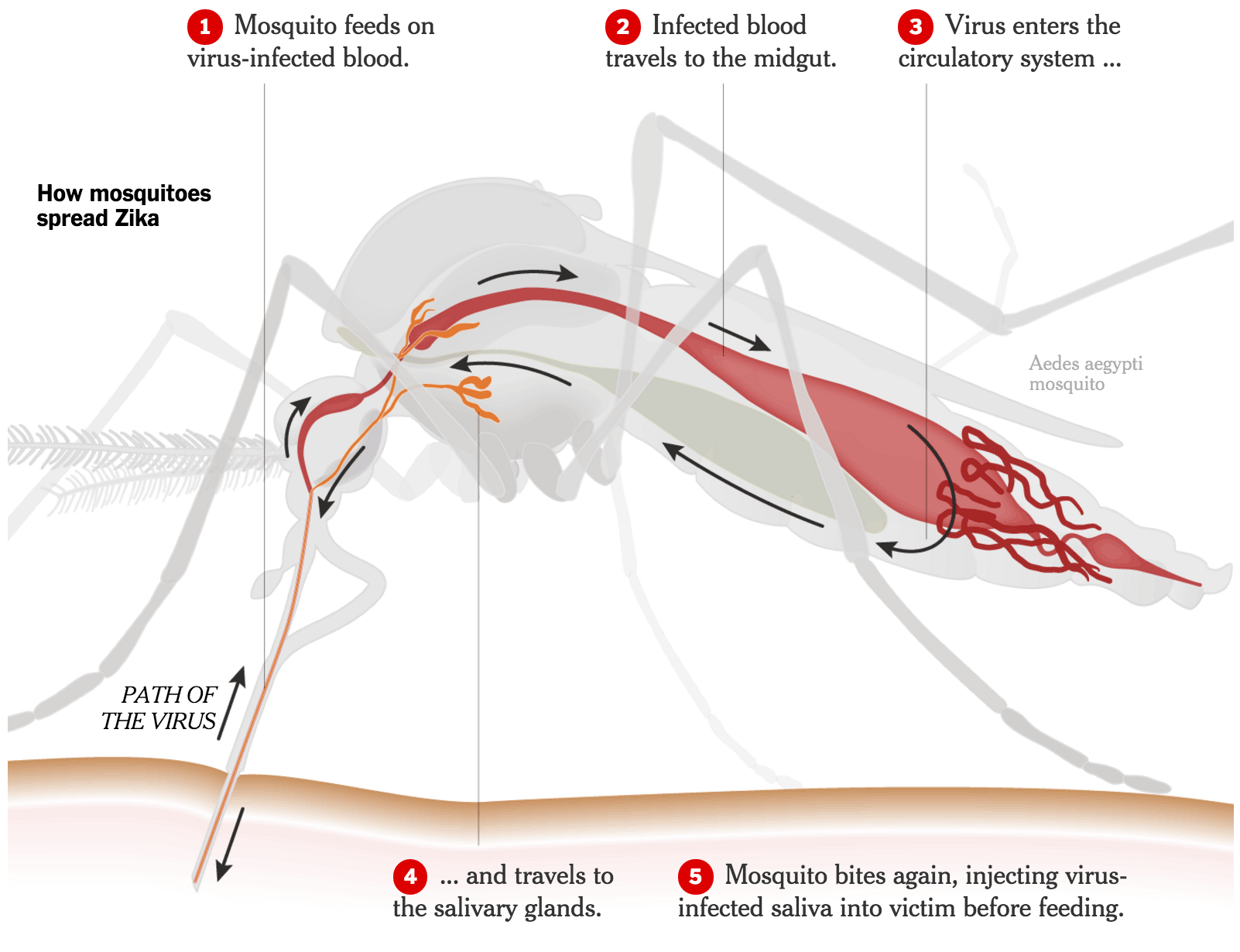
Zika virus is a flavivirus that is transmitted primarily by Aedes mosquitos. The virus was first identified in Uganda in 1947 in monkeys through a network that monitored yellow fever, and later discovered in humans in 1952 in Uganda and the United Republic of Tanzania. 

Where is Zika found in the world?

 Outbreaks of Zika virus have been reported from several different areas around the world including Africa, the Americas, Asia, and the Pacific. Below is a map that shows countries and territories with active Zika virus transmission and reported cases. 


http://traveller24.news24.com/News/map-the-spread-of-the-zika-virus-20160208

How do you get Zika?

Zika virus can be transmitted through:
  • mosquito bites (of an infected Aedes species mosquito)
  • from infected mother to child
  • sex
  • blood transfusion
  • laboratory and healthcare setting exposure

http://impakter.com/wp-content/uploads/2016/03/screen-shot-2016-03-21-at-5.53.23-p.m.png

How do you know if you have Zika?

Many people infected with Zika virus won't have any symptoms or might only have mild symptoms. A blood or urine test can confirm Zika infection diagnosis, but there is no specific medicine to treat Zika. The most common symptoms of Zika are:
  • rash
  • fever
  • conjunctivitis (red eyes)
  • joint pain 
Other symptoms include: 
  • headache
  • muscle pain
Zika is typically mild and symptoms usually last for several days to a week. Usually, people who have Zika do not get sick enough to go to the hospital and it is also very rare for people to die of Zika. Since the symptoms of the virus are mild, some people might not even realize they have been infected.  

If women get Zika during or before pregnancy, will their developing babies be affected?

If a woman gets Zika and recovers from the infection, they are believed to be immune to it, so no harm can come to the baby if the woman becomes pregnant later on. But, to be sure that no virus is in the blood even after a silent infection, the Center for Disease Control and Prevention recommends waiting eight weeks (which is triple the amount of time the virus has been known to persist) before trying to conceive. If a woman is infected with Zika during her pregnancy, it is likely that the developing baby will be born with birth defects, or may possibly even die in the womb. 

Microcephaly is a common birth defect associated with Zika that is shown in the picture above. 

Are there preventions for Zika?

Yes. Protection against mosquito bites is key to preventing Zika virus infection. People can help protect themselves against mosquito bites by wearing light-colored clothes that cover as much of the body as possible. One could also use insect repellent containing DEET and use physical barriers such as window screens, closing doors and windows, and sleeping under mosquito nets to prevent getting bitten. In addition to this, people can prevent getting Zika virus through sexual transmission by practicing safe sex (including correct and consistent use of condoms) or abstaining from sexual activity. It is also important for people to check for any travel notices and learn about which areas are affected by Zika before traveling so that plans can be made accordingly and the proper preventative measures for both before, during, and after the trip can be taken. 

Are there treatments for Zika?

There are no current treatments for Zika, but there are treatments for the symptoms. In order to treat the symptoms, one should get plenty of rest, drink fluids to prevent dehydration, and take medicine such as acetaminophen to reduce fever and pain. 

References:


Sunday, January 22, 2017

American Association of Poison Control Centers

Reference: http://www.aapcc.org/

Alerts

1) Bath Salts: Synthetic cathinones, otherwise known as "bath salts," are illegal drugs that can cause dangerous, and sometimes even permanent side effects. Some possible side effects of this drug include: paranoia, hallucinations, delusions, violent behavior, suicidal thoughts, seizures, chest pain, nausea, vomiting, and increased blood pressure and heart rate. The drug is most popular among 20-29 year olds, but poison centers have seen exposures in ages younger than 6 and older than 59.

Bath Salts
Photo from:
 http://www.nj.com/news/index.ssf/2011/04/
six_chemicals_used_to_make_bat.html

2) Hand Sanitizer: Although it seems harmless, hand sanitizer be be harmful and even deadly to children who ingest more than just a taste. This is because the amount of alcohol in hand sanitizer ranges from 40% to 95% and over 60% of it is ethyl alcohol which has a stronger alcohol concentration than most hard liquors. If too much hand sanitizer is ingested, one can experience alcohol poisoning. Common symptoms of alcohol poisoning include: confusion, vomiting and drowsiness, and in severe cases, respiratory arrest and death. It's important to keep hand sanitizers out of reach of children and only use dime-sized amounts in order to prevent potentially harmful exposure.

3) Laundry Detergent Packets: Young children should beware of laundry detergent packets. If swallowed, highly concentrated single-load liquid laundry detergent packets can cause excessive vomiting, sleepiness, wheezing, gasping, and other serious breathing problems. In some cases, there have been reports of corneal abrasions when the detergent gets into a child's eyes. Detergent containers should be kept closed stored out of reach of children to avoid any possible poisoning incidents.

4) Opioid (Narcotic) Pain Medications: Opioid-related deaths and opioid dependence have been increasing over the years. Opioids, or narcotics, are a subcategory of analgesics. These are pharmaceuticals that relieve pain by reducing the intensity of pain signals reaching the brain and affecting the brain areas controlling emotion, which decreases the effects of a painful stimulus. Each day, nearly 1,000 people are treated in emergency departments for misusing/abusing these drugs. Due to a recent increase in the acceptance of use of prescription opioids for the treatment of chronic, non-cancer pains such as back pain or osteoarthritis, the U.S. is now dealing with a prescription painkiller overdose epidemic.

5) Synthetic Cannabinoids: Synthetic Cannabinoids, also known as "synthetic marijuana" contains powerful chemicals called cannabimimetics and can cause dangerous health effects. Synthetic cannabinoids are not tested for safety, so users can never be exactly sure of what chemicals they are putting into their bodies. These drugs can be very addictive and can also cause live-threatening health effects such as as seizures, hallucinations, racing heartbeat, and suicidal thoughts to name a few.

Photo from: http://www.testcountry.org/all-you-need-to-know-about-k2spice-and-synthetic-cannabinoids.htm
Synthetic Cannabinoids
Photo from:
 http://www.testcountry.org/
all-you-need-to-know-about-k2spice-and-synthetic-cannabinoids.htm
6) E-Cigarettes and Liquid Nicotine: Exposure to e-cigarettes and liquid nicotine can cause illness and symptoms such as nausea and vomiting. In 2016, through December 31, AAPCC has received 1,492 e-cigarette devices and liquid nicotine reported exposures across age groups. America's poison centers are especially concerned with children being exposed. Users of these products should make sure to protect their skin when handling them, follow the specific instructions for disposal , and keep them locked up and out of reach of children.

7) Food and Mushroom Poisoning & Recalls: It is estimated by the CDC that each year, about 48 million people get sick, 128,000 are hospitalized, and 3,000 die of foodborne diseases. A foodborne illness, also known as food poisoning, is an illness caused by ingesting contaminated food. Infectious organisms such as parasites, viruses, bacteria, or other toxins are the most common cases of food poisoning. Food can be contaminated at any time during processing or production, or even at home if food is incorrectly cooked or handled. Common symptoms of food poisoning include abdominal cramps, nausea, diarrhea, vomiting, upset stomach , dehydration, and fever. Severe cases can cause long-term health problems or death. Safe food preparation and storage is essential. Some recent food recalls include:

King's Pastry, located in Ontario, Canada recalling several cakes because the products contained tree nut allergens that were not listed on the product  labels --D.F. Stauffer Biscuit Co., Inc. recalling one specific best by date of 32 oz. Original Animal Cracker because they may be packaged with other cookies that contain mild powder

8) Current Annual Report Highlights: In 2014, someone called a poison center every 11 seconds. Poison centers managed 2.9 million cases, about 2.2 million of which were about people coming into contact with dangerous or potentially dangerous substances. Over 27,000 exposures took place at a school. However, fewer than 10,000 calls to poison centers were made from schools. 21% of exposure calls to poison centers came from health care facilities.

For emergency, information, & prevention call The American Association of Poison Control Centers (AAPCC): 1-800-222-1222

In 2015, America's 55 poison centers received over 2.8 million calls. Of those about 2.2 million of which were about people coming into contact with dangerous or potentially dangerous substances. The rest were calls for information. 


Photo from: http://www.aapcc.org/

Current Annual Report 2015

Age & gender distributions: 

  • children <6 (47%)
  • older children 6-12 (6%)
  • teens 13-19 (8%)
  • adults 20-59 (26%)
  • older adults 60+ (8%)
  • unknown age (5%)
Male predominance among cases involving children less than or equal to 12 years of age. This gender distribution was reversed in teenagers and adults, with females comprising the majority of reported exposures. 


Chronicity:
Most human exposures, 1,889,845 (87.2%) were acute cases compared to 953 acute cases among the 1831 fatalities (52.1%). Chronic exposures comprised 2.05% (44,369) of all human exposures. Acute-on-chronic exposures numbered 202,680 (9.35%).

Reasons for exposure:
Most human exposures were unintentional (78.4%) including: unintentional general (52.5%), therapeutic error (12.7%), and unintentional misuse (6.03%).

Scenarios:
The most common scenarios for all ages of the total 275,979 therapeutic errors included: wrong medication taken or given (16.9%), inadvertent double-dosing (30.1%), other incorrect dose (14.6%), doses given/taken too close together (11.3%), and inadvertent exposure to someone else's medication (8.48%).

Reason by age:
17.6% of human exposures were intentional. In 11.7% of cases, suicidal intent was suspected. In 2.62% intentional misuse was suspected. In 2.38% intentional abuse was suspected. There were more unintentional exposures than intentional exposures in all age groups with the exception of ages 12-19 years. Of the 1256 reported fatalities with RCF 1-3, the main reason reported for children under or equal to 5 years of age was unintentional while most of the fatalities in adults over or equal to 20 years of age were intentional.

Route of exposure: 

  • Ingestion (83.6%)
  • Dermal (6.96%)
  • Inhalation/nasal (6.32%)
  • Ocular (4.23%)
For the 1256 exposure-related fatalities: 
  • Ingestion (80.2%)
  • Inhalation/nasal (9.39%)
  • Unknown (8.84%)
  • Parenteral (6.29%)
Note that each exposure case may have more than one route. 


Top substances: 
The top 25 substances that are most frequently involved in human exposures are:
(listed from highest to lowest percent of exposure)

  1. Analgesics 
  2. Cleaning Substances (household) 
  3. Cosmetics/Personal Care Products 
  4. Sedative/Hypnotics/Antipsychotics
  5. Antidepressants
  6. Antihistamines
  7. Cardiovascular Drugs
  8. Foreign Bodies/Toys/Miscellaneous
  9. Pesticides
  10. Topical Preparations
  11. Alcohols
  12. Stimulants & Street Drugs
  13. Vitamins
  14. Cold & Cough Preparations
  15. Anticonvulsants
  16. Antimicrobials
  17. Hormones & Hormone Antagonists
  18. Bites & Envenomations
  19. Gastrointestinal Preparations
  20. Dietary Supplements/Herbals/Homeopathic
  21. Plants
  22. Chemicals
  23. Fumes/Gases/Vapors
  24. Other/Unknown Non-drug Substances
  25. Hydrocarbons